
What the Employment Rights Act 2025 Means for You.
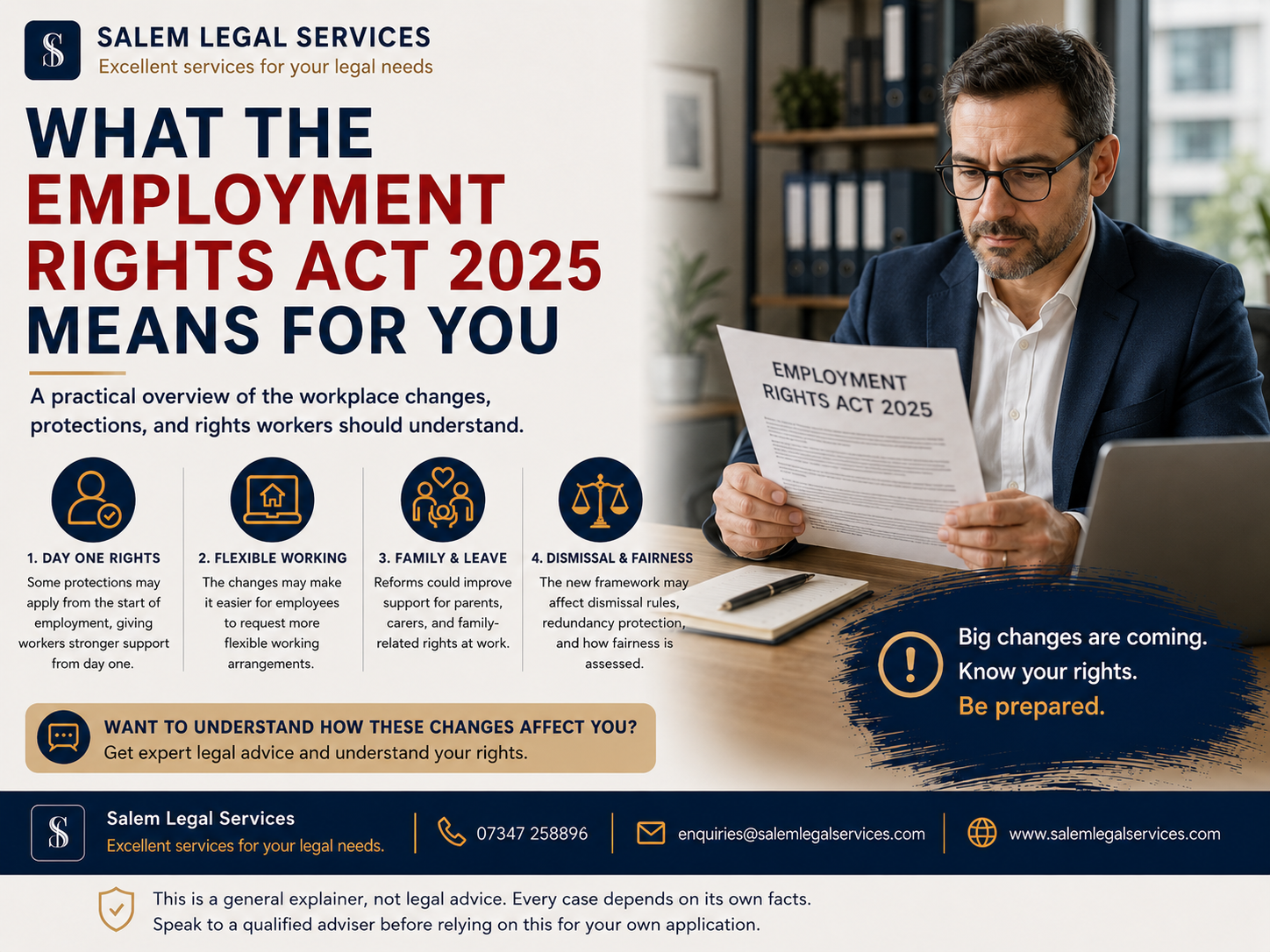
The Employment Rights Act 2025
If you have a job, are starting your first job, or are even just thinking about working, there’s some important news.
The Employment Rights Act 2025 became law on 18 December 2025, and it’s going to change a lot about your rights at work over the next couple of years. Let’s break it down in simple terms so you can understand what it means for you.
What Has Already Changed
Some rules came into effect immediately. One of the new rules already in effect is that the old system around strikes, called “minimum service levels,” has been removed. This means that during a strike, employers no longer have to keep certain services running at all costs.
Also, if you take part in industrial action, such as striking for better pay or working conditions, you are now protected from unfair dismissal. This means your employer cannot fire you just for taking part in a strike.
Changes Coming in April 2026
Starting in April 2026, several new rights will affect everyday work life.
Parental Leave.
Parental leave and paternity leave will become a “day one right.” This means that from your very first day at work, you can take time off to care for your child if you are a parent or partner, rather than waiting for months of employment to qualify.
Statutory Sick Pay
Statutory sick pay, or SSP, will be paid from the very first day you are ill. Currently, you have to wait a few days and earn above a certain amount to get it. After this change, more people will be eligible, and you will be paid sooner when you are sick.
Collective redundancy protective award
If your employer fails to consult you properly during collective redundancies, the maximum amount they can be required to pay you will double, i:e from 90 days’ pay to 180 days’ pay. This is called the protective award and is meant to ensure employers treat staff fairly when making large groups of people redundant. This would change on 6 April 2026.
Whistleblowers
Whistleblowers will get stronger protection when reporting sexual harassment at work. This means if you speak up about harassment, your employer cannot punish you or treat you unfairly. This would change on 6 April 2026.
Trade Unions
Trade union recognition will be simpler. If you belong to a trade union, it will be easier for your employer to formally recognise it so the union can represent you effectively.
Fair Work Agency
The Fair Work Agency will be established on 7th April 2026 to bring together existing enforcement bodies and enforce your employment rights, such as holiday pay and sick pay, making it easier to ensure that workers are treated fairly.
Gender Pay Gap and Menopause Support
From 6 April 2026, employers are encouraged to create plans to address gender pay gaps and provide support for employees going through menopause. These plans will be voluntary at first but will become a legal requirement in 2027.
Changes Coming in October 2026
Harassment
Employers will be responsible if harassment happens at work, even from third parties like customers or clients, unless they have done everything reasonably possible to prevent it. They will also need to take all reasonable steps to prevent sexual harassment among staff. Changes to non-disclosure agreements (NDAs) are expected too, which will prevent employers from using NDAs to stop workers from reporting harassment or discrimination. The exact date for this change is not yet confirmed.
Tipping
Employers will need to talk with staff or their representatives before setting a tipping policy. These policies must also be reviewed and updated every three years.
Employment Tribunal Time Limits
The time you have to make a claim to an employment tribunal will increase from 3 months to 6 months for all types of claims.
Trade Union Rules
Employers will have new duties to support trade unions: They must inform workers of their right to join a union, update rules for union access to workplaces, provide reasonable facilities and time off for union representatives, and follow an updated Code of Practice for union recognition.
Looking Ahead to 2027
From 2027, more changes will give workers even stronger protections.
Unfair Dismissal
Protection from unfair dismissal will apply after just six months on the job rather than two years on the job. This means if your employer fires you without a fair reason, you can challenge it sooner. Additionally, the limit on the compensatory award for unfair dismissal will be removed.
Dismissal and Rehire
Employers will no longer be allowed to dismiss employees and then rehire them on worse terms, sometimes called “fire and rehire.” This protects workers from having their pay, hours, or benefits unfairly reduced.
Employers will have to give reasonable notice about shifts and explain why a flexible working request has been refused. This means you will have more certainty about your work schedule and the ability to plan your personal life.
Zero-hour and low-hour contracts
Starting in 2027, workers on zero-hours or low-hours contracts will have the right to request guaranteed working hours if they want more stable schedules.
Compensation for Cancelled Shifts
Starting in 2027, if your employer cancels, reschedules, or shortens a shift, you will have the right to be paid for it.
Reasonable notices of Shifts
Employers will be required to give reasonable notice for your shifts and any changes to them, so you have time to plan your schedule.
Flexible Working Requests
In 2027, if an employer refuses a flexible working request for a genuine business reason, they must explain clearly why, using one of the eight acceptable reasons. This will turn current best practice into a legal requirement.
Bereavement Leave
There will be a new right to statutory bereavement leave. This leave will be unpaid. This will happen in 2027.
Further harassment changes.
The law will specify what 'reasonable steps' means when preventing sexual harassment, following earlier changes in October 2026. This change will happen in 2027.
Why You Should Care
Even if you have never had a problem at work, knowing your rights is powerful. These changes give you more control over your time, pay, and safety at work. If you are unsure about how these new rules affect you, or if your employer is not following them, Salem Legal Services can help you understand your options and protect your rights.
The Employment Rights Act 2025 is being rolled out in stages, so now is the perfect time to get informed and be prepared.
